
A client's security team asks a simple question during an application test: which open-source components sit behind the service, and which of them can reach production? The repository contains direct dependencies, transitive packages, build actions, container layers, and artifacts pulled from external registries. The build pipeline produced the application, but nobody has mapped the pipeline as part of the attack surface.
That gap is why supply-chain findings now appear in penetration-test scope. Open-source software has become foundational to modern applications, and Sonatype's 2024 analysis estimated approximately 6.6 trillion annual package requests across major ecosystems, including 4.5 trillion JavaScript npm requests, 530 billion Python PyPI requests, 1.5 trillion Java Maven requests, and 159 billion .NET NuGet requests. The same analysis covered more than 7 million open-source projects and 60 million project versions across the ecosystems examined. Sonatype's 2024 scale analysis also reported 704,102 malicious open-source packages identified since 2019, with a 156% year-over-year increase in 2024.
A pentest provider therefore needs more than a vulnerability scanner. The right supply chain security software should generate usable SBOMs, correlate dependencies with vulnerabilities, inspect artifacts, and enforce policy in CI/CD. Each tool below is judged through a delivery lens: what an MSSP can prove to a client, how repeatable the assessment becomes, and which gaps a tester still has to cover manually.
Table of Contents
- 1. GitHub Advanced Security
- 2. GitLab Ultimate
- 3. Snyk Platform
- 4. Sonatype Nexus Platform
- 5. JFrog Xray and JFrog Advanced Security
- 6. Aqua Security Platform and Trivy
- 7. Anchore Enterprise
- 8. Chainguard Images Registry and Enforce
- 9. ReversingLabs Spectra Assure
- 10. Cycode
- Supply Chain Security Tools Comparison
- Matching Your Stack and Where Pentesting Verifies Risk
1. GitHub Advanced Security
Best fit: GitHub-centered development teams that want supply-chain controls inside existing repository workflows.
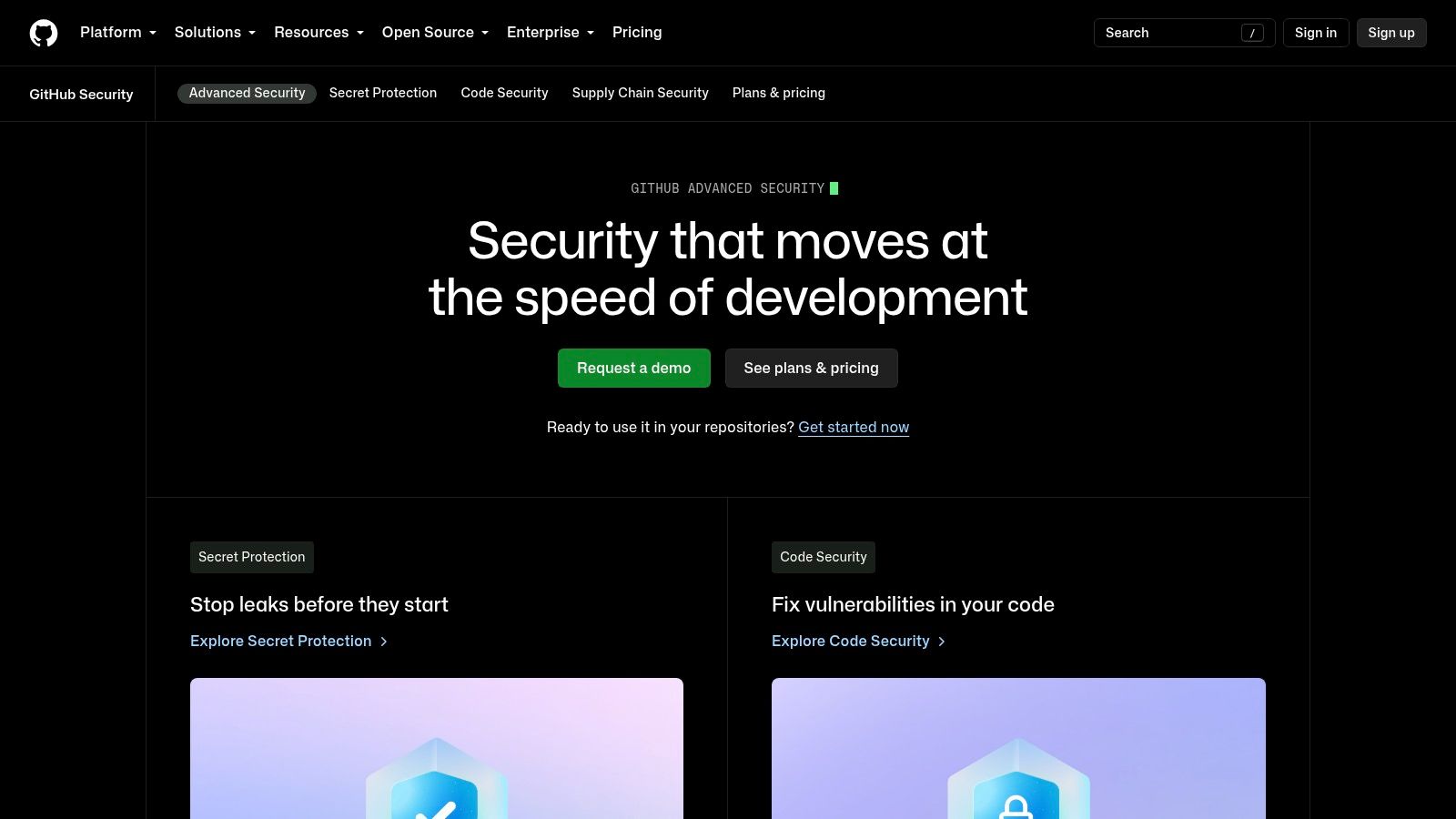
GitHub Advanced Security is strongest when the client already lives in GitHub. Its Dependency Graph, Dependabot alerts, and automated update pull requests give a pentest team a fast way to identify direct and transitive dependency exposure without building a separate repository ingestion layer. Secret scanning and code scanning add useful context around the repository itself, while SARIF outputs can feed CI/CD enforcement and customer evidence packs.
The delivery advantage is integration depth. An MSSP can request repository access, review alerts, inspect remediation pull requests, and show whether developers have addressed findings in the same system where they manage code. Enterprise-level organization controls also help providers standardize enablement and policy across client repositories. SBOM and provenance support make the platform more useful when the engagement includes release integrity, not just vulnerable packages.
The limitation is ecosystem dependence. GHAS provides the least friction when source, pull requests, actions, and governance all sit in GitHub. A client using GitLab, Bitbucket, Jenkins, or a separate artifact repository may need additional tooling and evidence reconciliation. Pricing is also not fully transparent, with add-on costs handled through a calculator and sales process.
Pentest delivery considerations
A tester still needs to validate whether repository findings reach deployed assets. Dependabot can identify a vulnerable package, but it won't prove exploitability in the running application, whether the vulnerable code path is reachable, or whether a build used the expected commit. Review GitHub Actions permissions, third-party actions, token exposure, branch protection, and workflow provenance. A practical companion resource is this guide to GitHub Actions security.
2. GitLab Ultimate
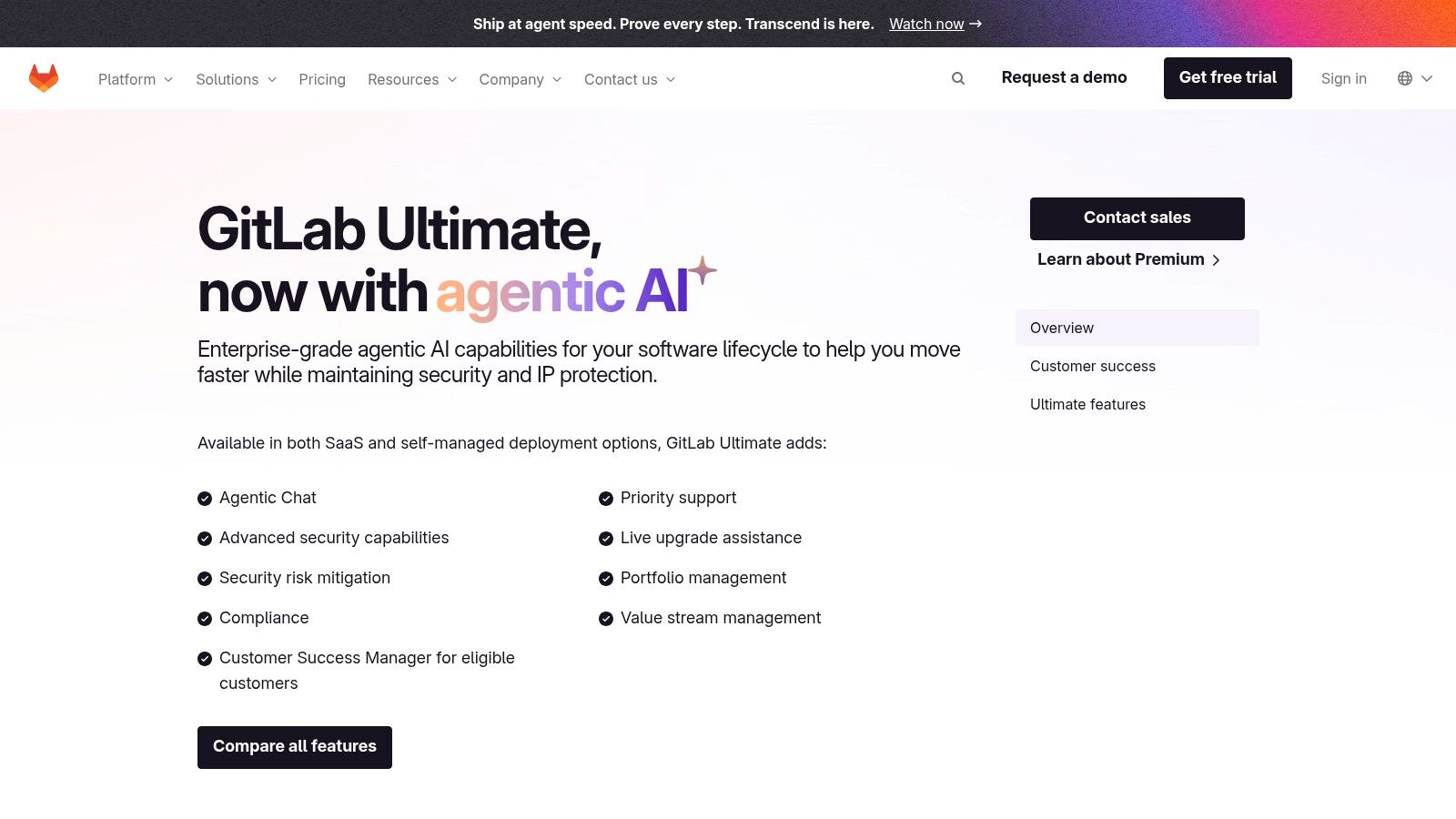
GitLab Ultimate is a practical choice when the client wants one platform for source control, CI/CD, application security, and compliance. Its dependency and container scanning run inside GitLab pipelines, while license compliance and SBOM generation support procurement and audit conversations. Centralized compliance reporting gives an MSSP a single place to show policy status across projects, branches, and delivery workflows.
The self-managed option matters for clients with strict infrastructure or data-residency requirements. A provider can work within the customer's existing GitLab deployment rather than introduce a separate SaaS control plane. That reduces integration overhead and can make repeatable assessments easier, particularly when the client already uses GitLab runners and merge-request approvals.
The trade-off is commercial and organizational. Advanced supply-chain capabilities require the Ultimate tier, so the client may face a meaningful licensing decision before the pentest team can use the full control set. The platform also works best when development is already standardized on GitLab. A client with repositories in several systems may gain less from its central reporting model.
What to prove during an engagement
Don't stop at a green pipeline. Inspect the rules that create the result. Confirm which projects are covered, whether container scanning includes the deployed image, how exceptions are approved, and whether the generated SBOM contains transitive relationships and stable component identifiers. Test a controlled vulnerable dependency and verify that the pipeline blocks, quarantines, or merely reports it. That distinction determines whether the tool provides prevention or only evidence after the fact.
3. Snyk Platform
Snyk takes a developer-first approach to software composition analysis. Its pull-request and IDE integrations place dependency findings where developers already make changes, while automated fix pull requests can shorten the path from discovery to remediation. Container and infrastructure-as-code scanning extend the assessment beyond application packages, and SBOM export gives an MSSP a useful artifact for customer reporting and downstream correlation.
That workflow is valuable in consultancy work. A provider can demonstrate not only that a vulnerable library exists, but also how the platform presents the upgrade path and whether the team accepted or rejected the recommendation. Broad repository and CI/CD integrations make onboarding relatively straightforward across varied client environments.
The operational risk is alert volume. Snyk exposes several categories of risk, and teams may need to tune severity, reachability, licenses, and project ownership before the results become actionable. Costs can also scale with seats and project volume. A large MSSP should test its licensing model against customer count, repository count, and the frequency of recurring scans before committing to a broad rollout.
Where manual testing remains necessary
Snyk can tell you that a component has a vulnerability. It doesn't automatically establish that the vulnerable function is reachable through the client's application, that exploit conditions exist in production, or that a compensating control prevents exploitation. During a pentest, use the finding as a lead. Trace the package through the call graph, inspect runtime configuration, test the relevant endpoint, and capture evidence that separates theoretical exposure from exploitable risk.
4. Sonatype Nexus Platform
Sonatype Nexus Platform combines Nexus Lifecycle for software composition analysis with Repository Firewall, which screens packages before they enter a repository. That pre-ingress control gives an MSSP a concrete test target. A client can demonstrate that a package was blocked at the proxy or repository layer, before developers consumed it or a build incorporated it.
Nexus Lifecycle adds dependency, license, and policy governance. Integration with Nexus Repository and support for Artifactory help providers assess clients with different artifact-management setups. Sonatype's research also frames a useful engagement question: how does the client stop suspicious components before they reach a build? The 704,102 malicious open-source packages identified since 2019 figure is most useful here as context for testing Repository Firewall quarantine rules, not as another general market statistic. The underlying Sonatype analysis reports that detected software-supply-chain attacks doubled again in 2024.
The trade-off is deployment complexity. Policy design becomes difficult across multiple package ecosystems, emergency exceptions, internal mirrors, and separate repository teams. Public pricing is not fully transparent, so an MSSP should obtain written commercial terms before defining a managed service.
A useful assessment pattern
Test the proxy, not only the dashboard. Attempt to retrieve a controlled package that violates policy, then verify the result at repository and pipeline layers. Review bypass paths, developer access to public registries, quarantine handling, and evidence retention. This produces client evidence about whether controls prevent ingress, preserve an audit trail, and withstand operational exceptions.
5. JFrog Xray and JFrog Advanced Security
JFrog Xray is a binary-centric option for clients whose builds and artifact lifecycle are anchored on Artifactory. It connects software composition analysis, curation, impact analysis, and remediation at the repository layer. That gives a pentest team a view of what was built and stored, not only what appears in source manifests.
The Artifactory relationship is the reason to shortlist it. Policy can be applied close to packages, containers, and other artifacts, while federation options support larger enterprise environments. JFrog's security research and vulnerability intelligence provide additional context for triaging findings. The Advanced Security bundle extends the assessment into deeper supply-chain exposure scanning.
For an MSSP, this can make evidence collection cleaner. You can associate a vulnerable component with an artifact, repository path, build, and downstream deployment. That relationship is more persuasive to a client than a source-only alert with no asset mapping.
The limitation is equally clear. Organizations without a substantial JFrog footprint may not receive the same value from the integration. Public pricing for Advanced Security is limited and commonly sales-led, so providers should model the cost of managed delivery rather than assume the repository platform includes every security capability.
Test the artifact path
A source scan won't answer whether the promoted binary differs from the reviewed source. Validate build metadata, artifact immutability, repository permissions, promotion rules, signing, and rollback. Ask the client to identify which Xray policy decision prevents a vulnerable artifact from reaching a production repository. If the answer is only a dashboard warning, the control needs stronger enforcement.
6. Aqua Security Platform and Trivy
Aqua combines commercial governance with Trivy, its open-source scanner. Trivy can generate SBOMs, scan repositories, filesystems, images, and Kubernetes targets, and support attestation and signing workflows through Cosign and Sigstore. Aqua's commercial platform adds policy management, enterprise reporting, and visibility from code through runtime.
That split works well for service providers. Trivy offers a familiar adoption path and standard outputs across client pipelines, while Aqua supplies the governance layer needed for recurring assessments and audit evidence. A provider can use the scanner during a technical test, then use the platform to track exceptions, policy decisions, and remediation over time.
The scope is broader than package scanning. Image composition, Kubernetes deployment, provenance, attestations, and runtime context all affect whether a finding matters. A pentester can compare the declared SBOM with the image running, inspect signature verification, and test whether unsigned or altered artifacts are rejected.
Manage the trust boundary
The open-source footprint is useful, but it doesn't remove the need to assess action provenance, CI/CD permissions, registry controls, and signing-key custody. Aqua's commercial pricing is sales-led, with no public list. Risk teams should also review the 2026 Trivy action compromise that was investigated and mitigated before approving automated actions in sensitive pipelines. The issue is a reminder that security tooling itself belongs in the supply-chain threat model.
For container-focused engagements, pair the platform with focused Docker container security testing. The scanner can identify composition and configuration risk. Manual testing still needs to verify privilege, escape paths, exposed services, runtime secrets, and Kubernetes authorization.
7. Anchore Enterprise
Anchore Enterprise is built around the SBOM lifecycle. Syft generates SBOMs, Grype scans for vulnerabilities, and the enterprise layer adds policy-as-code, continuous inventory management, build enforcement, and compliance reporting. That makes the platform a strong candidate when the client's primary question is not just “what is vulnerable?” but “can we produce defensible evidence about what was shipped?”
The open-source foundation helps during assessments. A pentest team can inspect the generation and scanning workflow, reproduce findings outside the enterprise interface, and integrate outputs into varied pipelines. That transparency is useful when a client challenges a result or needs to reconcile multiple scanners.
Anchore also suits audit-oriented delivery. An MSSP can preserve SBOMs, policy decisions, exceptions, and build outcomes as evidence. The value depends on inventory quality, though. An SBOM that omits transitive components, lacks hashes, or uses inconsistent identifiers won't support reliable incident response.
Judge the SBOM, not the export button
CISA's 2025 draft minimum-elements guidance emphasizes machine processability, component identifiers, dependency relationships, and context for correlation with vulnerability advisories. CISA's SBOM guidance supports a harder buyer test: can the platform reconcile supplier SBOMs, identify stale inventories, distinguish reachable from unreachable components, and preserve evidence for customer notification?
Enterprise licensing is sales-led, with no public pricing. Teams may also need tuning when sources disagree on package identity or severity. During a pentest, compare the SBOM with the running container and build manifest. The discrepancy often matters more than the headline vulnerability count.
8. Chainguard Images Registry and Enforce
Chainguard takes a prevention-oriented route. It provides minimal container images and curated language libraries with SBOMs, signatures, security advisory feeds, and SLSA provenance. Enforce adds policy controls around trusted artifacts and attestations.
For a pentest provider, the advantage is a smaller and more controlled base layer. Minimal images can reduce unnecessary packages and make the client's provenance story easier to explain. Signed artifacts and attached SBOMs also create concrete evidence for release-integrity testing. The provider can verify whether the deployed image matches the approved digest, whether signatures are checked, and whether provenance claims connect the artifact to an authorized build.
The approach works best when the client is willing to change base images and developer workflows. Migration can expose compatibility problems, unsupported packages, and assumptions embedded in existing Dockerfiles. Chainguard is positioned at a premium, and pricing is primarily sales-led.
Verify the promised control
Don't treat a signed image as proof of a secure deployment. Test registry permissions, digest pinning, admission controls, runtime configuration, secret injection, and the build identity that produced the artifact. NIST guidance recommends verifying digital signatures, scanning newly acquired open-source packages, generating an SBOM early in development, and retaining the ability to stop artifacts from being used in builds according to severity. NIST's software supply-chain guidance gives the assessment team a useful control baseline.
9. ReversingLabs Spectra Assure
ReversingLabs Spectra Assure addresses a gap that source-focused tools often leave open. It analyzes compiled software, installers, packages, and third-party binaries for malware, tampering, secrets leakage, and compliance issues. That makes it relevant when a client ships closed-source products or consumes vendor binaries that cannot be meaningfully assessed through source repositories.
The last-mile perspective is valuable in penetration testing. A source dependency scan may show a clean project while the release artifact contains an unauthorized modification, embedded secret, suspicious component, or unexpected payload. Spectra Assure can generate SBOMs and integrity checks, then connect results to CI/CD and IT service-management workflows.
This is a different analysis domain, so the team needs to understand what the verdict means and how it relates to exploitation. Binary findings still require triage. A suspicious file may be malicious, but the pentest report should establish where it came from, whether it executes, what permissions it receives, and which customer systems could be affected.
Use it for artifacts source scanners miss
Prioritize vendor installers, update packages, desktop clients, firmware-like bundles, and release archives. Compare hashes across the build, repository, delivery channel, and deployed host. Inspect signing certificates, embedded dependencies, extracted scripts, and network behavior in a controlled environment.
The platform offers trials and tiered options, but pricing is mainly sales-led with limited public list information. For an MSSP, the strongest business case is a repeatable binary-assurance service for clients whose supply chain includes proprietary or third-party compiled artifacts.
10. Cycode
Cycode positions application security posture management as a unifying layer across code, pipelines, secrets, infrastructure as code, cloud configuration, dependencies, and ticketing. That breadth suits MSSPs managing varied customer stacks. Instead of asking a provider to reconcile every scanner manually, Cycode can centralize signals, policy, ownership, and reporting.
The multi-tenant angle is the main delivery benefit. A service provider can onboard repositories and CI systems, establish customer-specific policies, and present a consolidated posture view while retaining separate remediation workflows. Integrations across repositories, CI tools, and ticketing systems help connect a finding to the team that can fix it.
Breadth also creates risk. A platform with many signal sources can produce alert overload if onboarding isn't phased. Enterprise pricing is sales-led, so a proof of value should test the client's real repositories and pipeline patterns rather than rely on a polished demonstration.
Focus the first assessment
Start with one representative application and map its repository, build system, artifact store, cloud account, secrets path, and deployment target. Measure whether Cycode identifies duplicate findings, preserves source context, and creates actionable tickets. Then test policy enforcement on a controlled build. A dashboard that aggregates risk without stopping unsafe releases may improve visibility without reducing exposure.
Supply Chain Security Tools Comparison
| Product | Core features ✨ | Quality / UX ★ | Pricing & Value 💰 | Target audience 👥 | Unique selling points 🏆 |
|---|---|---|---|---|---|
| GitHub Advanced Security (GHAS) | ✨ Code & secret scanning, Dependabot, SBOM, SARIF/provenance | ★★★★, GitHub‑native | 💰 Org/licensed add‑on (sales‑led) | 👥 GitHub‑centric orgs & MSSPs | 🏆 Deep native GitHub automation |
| GitLab Ultimate | ✨ CI/CD‑embedded dependency & container scanning, SBOM, compliance | ★★★★, integrated DevSecOps | 💰 Ultimate tier (premium), SaaS/self‑managed | 👥 GitLab‑first teams & MSSPs | 🏆 Single‑platform CI/CD + security + compliance |
| Snyk Platform | ✨ SCA with fix PRs, container & IaC scanning, SBOM export | ★★★★, developer‑friendly UX | 💰 Seat/project pricing; scales with usage | 👥 Dev teams & MSSPs focused on dev workflows | 🏆 IDE/PR automation and actionable fixes |
| Sonatype Nexus Platform | ✨ Repository Firewall, Nexus Lifecycle SCA, pre‑ingress protection | ★★★★, enterprise‑grade controls | 💰 Enterprise, sales‑led pricing | 👥 MSSPs/enterprises hardening repos | 🏆 Market leader in pre‑ingress protection |
| JFrog Xray / Advanced Security | ✨ Binary‑centric SCA, impact analysis, Artifactory integration | ★★★★, artifact‑centric UX | 💰 Sales‑led; best value in JFrog stack | 👥 Artifactory customers, binary pipelines | 🏆 Deep artifact impact analysis & enforcement |
| Aqua Security + Trivy | ✨ CNAPP + Trivy SBOM/attestation, multi‑target scanning | ★★★★, strong OSS foundation | 💰 Trivy OSS; Aqua commercial sales‑led | 👥 Cloud‑native teams & MSSPs (runtime focus) | 🏆 Trivy ecosystem + runtime governance |
| Anchore Enterprise (Syft/Grype) | ✨ SBOM lifecycle, policy‑as‑code, Grype vuln scanning | ★★★, SBOM/governance focus | 💰 Sales‑led enterprise pricing | 👥 Teams needing SBOM governance & audits | 🏆 SBOM‑first policy enforcement |
| Chainguard | ✨ Signed minimal images, SLSA provenance, SBOMs, policy enforce | ★★★★, minimal‑image security | 💰 Premium, sales‑led | 👥 Providers delivering hardened base images | 🏆 Provenance + signed artifacts to reduce attack surface |
| ReversingLabs Spectra Assure | ✨ Deep binary/package analysis, malware & tamper detection, SBOM | ★★★★, binary analysis specialist | 💰 Trial + tiered, sales‑led | 👥 Teams inspecting compiled/third‑party binaries | 🏆 Binary‑level integrity & malware detection |
| Cycode (ASPM) | ✨ Unified code/pipeline/cloud posture, secrets, IaC checks | ★★★★, centralized posture UX | 💰 Sales‑led; PoV recommended | 👥 MSSPs needing multi‑tenant visibility | 🏆 Consolidates signals into one policy/reporting layer |
Matching Your Stack and Where Pentesting Verifies Risk
There isn't one universal winner. Start with the client's repository host, artifact store, and CI/CD platform. GitHub-centered teams should begin with GHAS. GitLab customers may gain more from GitLab Ultimate's integrated workflow. Artifactory environments deserve a close look at JFrog Xray, while Nexus-heavy environments may benefit from Sonatype's repository-layer controls. Container-heavy clients should compare Aqua and Trivy, Anchore, and Chainguard based on whether they need scanning, SBOM governance, or a more controlled image foundation.
Shortlist two or three tools that fit the existing stack. Don't select a platform solely because it exports an SBOM or displays a large vulnerability list. CISA describes an SBOM as a formal, machine-processable record of software components and their supply-chain relationships. CISA's consumption guidance supports testing whether the declared inventory matches the evaluated product, includes nested dependencies, and can be correlated with vulnerability data.
Run a short proof of concept on a representative repository and pipeline. Include direct and transitive dependencies, a container image, a third-party package, and a controlled policy violation. Check the following before recommending a platform:
- SBOM usability: Verify the export formats, dependency relationships, identifiers, hashes, provenance fields, and VEX or CSAF support against the client's audit requirements.
- Coverage: Confirm that the platform covers production artifacts, transitive dependencies, containers, third-party components, and the repositories the client uses.
- Response workflow: Test whether a newly disclosed vulnerability can be mapped to affected assets, prioritized by exploitability and business criticality, and routed to ticketing or incident response.
- Enforcement: Confirm whether policies block, quarantine, or merely report risky packages and artifacts.
- Operational cost: Measure alert volume, duplicate findings, exception handling, onboarding effort, and evidence export. Get pricing in writing where the vendor uses a sales-led model.
Pentesting verifies what scanners can't. NIST's Secure Software Development Framework organizes controls around preparing the organization, protecting software, producing well-secured software, and responding to vulnerabilities. NIST SP 800-218 guidance also supports evidence-backed checks of code review, executable testing, remediation, supplier attestation, and release decisions. A delivery team should test whether a vulnerable component is reachable, whether a compromised update can execute, whether a build identity can alter artifacts, and whether the client can identify its blast radius during a supplier incident.
ThreatExploit AI, available at threatexploit.ai, focuses on automated penetration testing rather than supply-chain scanning. That makes it complementary. Supply-chain platforms help prevent and detect component risk, while pentest verification confirms which exposures are exploitable across web, network, and cloud targets. For an MSSP, that separation produces a clearer client story: inventory and policy controls show what the organization knows and blocks, while evidence-backed exploitation shows what an attacker can reach and impact.
ThreatExploit AI gives security service providers automated penetration testing across web applications, networks, and cloud environments, with reconnaissance, exploitation, verification, and evidence-backed reporting. Use it alongside supply-chain security software to validate whether dependency, pipeline, and artifact findings create exploitable exposure, then visit ThreatExploit AI to evaluate the platform for repeatable client delivery.